
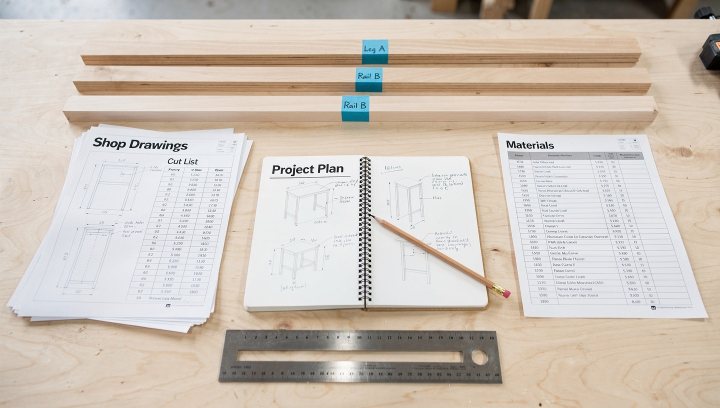
Bad woodworking plans do not always mean bad drawings. More often, they mean bad preparation. Beginner woodworkers tend to assume that if they have the materials and the tools, they are ready. But planning mistakes show up long before assembly, and they usually create the most frustrating kind of rework.
Quick answer: The most common planning mistakes beginners make are choosing projects that do not match their tools, skipping a cut list, failing to read the plan fully, ignoring build order, and underestimating material needs. Strong projects usually feel easier because they were planned better, not because they were simpler.
Planning mistakes that create avoidable problems
- Starting a project before checking all dimensions and material thickness
- Missing the difference between a materials list and a cut list
- Not deciding what gets cut, sanded, or pre-finished first
- Picking a project that needs more space or tool capacity than the shop allows
A practical beginner planning system
Step 1: Read the full plan
Do not read only the first page and start shopping. Study the whole sequence and flag anything unclear.
Step 2: Build a parts list
Break the project into actual pieces you will cut. This forces you to understand the design instead of copying numbers blindly.
Step 3: Confirm the workflow
Know what gets cut first, what needs matching parts, and which steps depend on assembly accuracy.
Step 4: Stage materials and tools
Prepare the stock, clamps, measuring tools, bits, and hardware before the build starts.
Bottom line
Most planning mistakes come from trying to save time. In practice, they create delays. A clear plan makes the build faster, cheaper, and much less frustrating.