
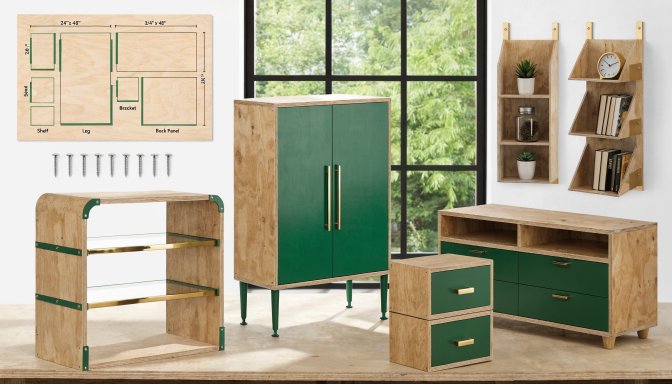
Plywood-efficient projects work best when the design respects the sheet. That means planning around panel dimensions, reducing awkward leftover shapes, and choosing builds that can reuse common rip widths or repeated parts. When the project is designed around the material, plywood becomes much more economical.
Quick answer: Projects that maximize plywood are usually shelves, cabinets, storage cubes, organizers, bench bases, and other box-style builds that rely on repeated panel parts and efficient sheet breakdown. The biggest gains come from designs that fit the material, not from last-minute cutting tricks.
Why plywood-focused projects save money
- Panels can be broken down into repeated parts
- Simple shapes reduce offcut waste
- Storage and cabinet projects often make strong use of full or half sheets
- Flat panel construction works well in smaller shops with portable tools
Project types that use plywood well
| Project type | Plywood advantage |
|---|---|
| Shelf unit | Repeated panels and easy yield planning |
| Storage cubes | Simple geometry and efficient batch parts |
| Shop cabinet | Strong value from flat sheet construction |
| Workbench base | Large panels become useful structure quickly |
Bottom line
Plywood becomes more affordable when the project is designed to use it intelligently. Repeated parts, simple shapes, and clear panel layouts are what make the biggest difference.