
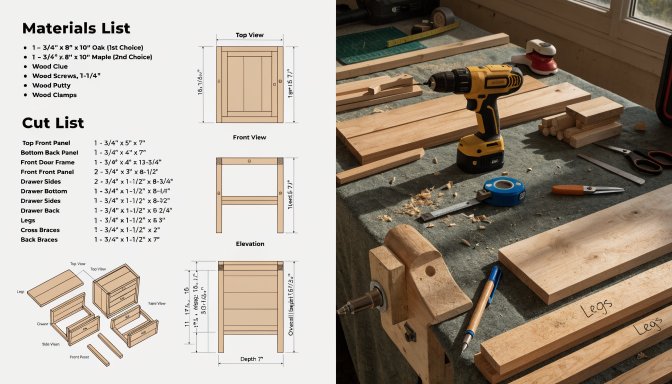
Plans with both a materials list and a cut list remove two major sources of beginner frustration: uncertainty at the store and uncertainty at the saw. The materials list tells you what to buy. The cut list tells you what each board or panel becomes. Together, they turn a vague project idea into something much easier to control.
Quick answer: Woodworking plans with materials and cut list help builders buy the right stock, prepare parts more efficiently, reduce waste, and move into assembly with less guesswork. They make projects feel more organized before the building even starts.
Why both lists matter together
- The materials list handles sourcing and cost control
- The cut list handles layout, sequencing, and part preparation
- Together they reduce overbuying and missed parts
- They make it easier to compare the plan to the actual build stage
What to look for in a strong plan
| Plan element | Practical value |
|---|---|
| Complete materials list | Better shopping and cost planning |
| Clear cut list | More efficient part prep and labeling |
| Matching diagrams | Easier confirmation of part names and sizes |
| Logical sequence | Smoother movement from raw stock to assembly |
Common problem with incomplete plans
Some plans show finished drawings but leave too much interpretation between the drawing and the build. That usually creates avoidable mistakes in shopping, cutting, or part tracking. The more complete the plan, the less likely that gap becomes expensive.
Bottom line
Woodworking plans with materials and cut list are valuable because they connect planning to execution. When both are present and clear, the whole project becomes easier to manage.