
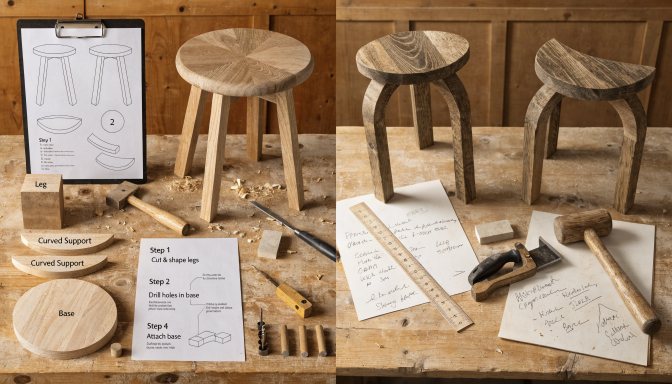
An easy-to-follow woodworking plan removes mental friction. It tells you what to buy, what to cut, what to label, and what to assemble next. Good plans feel clear not because they are short, but because they answer the questions a builder will naturally have at each stage of the project.
Quick answer: A woodworking plan is easy to follow when it has consistent diagrams, clear step order, complete materials and cut lists, and enough detail to reduce guesswork without overwhelming the builder.
Features that make plans easier to use
- Clear drawings that match the written instructions
- Part names and dimensions that stay consistent across the plan
- A step sequence that reflects how people actually build
- Notes that help prevent common mistakes before they happen
What often makes plans harder to follow
Plans become frustrating when dimensions conflict, steps jump ahead without explanation, or the builder is expected to infer too much from one image. Confusion usually comes from gaps, not from detail.
| Easy-follow feature | Why it matters |
|---|---|
| Consistent labeling | Reduces part-tracking errors |
| Logical order | Supports cleaner workflow |
| Readable diagrams | Improves understanding at a glance |
| Practical detail | Prevents stop-and-guess moments |
Bottom line
What makes a woodworking plan easy to follow is not fancy presentation. It is clarity that stays useful through shopping, cutting, staging, and assembly.