
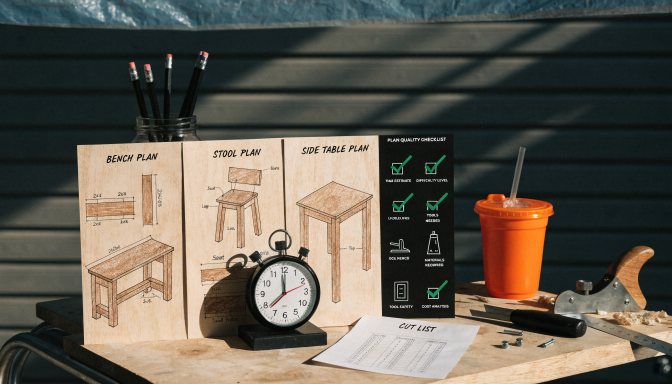
Time-saving plans do not always mean faster projects. They mean fewer wasted decisions, fewer restarts, and less effort spent translating vague instructions into workable steps. Good plans save time by reducing confusion before the build begins and reducing recovery time when something unexpected happens.
Quick answer: Pick woodworking plans that save time by looking for clear step-by-step sequence, complete materials and cut lists, manageable part counts, and realistic build scope for your tools and space. The right plan shortens confusion, not just cutting time.
What time-saving plans do well
- Make shopping and material prep easier
- Reduce the need to interpret unclear diagrams
- Break the build into practical stages
- Match the project size to common hobby-shop setups
How to evaluate a plan quickly
| Question | Why it matters |
|---|---|
| Is the cut list complete? | Incomplete prep creates delays later |
| Do the steps follow a clear build order? | Poor sequence leads to resets and rework |
| Does the project fit your shop? | Oversized projects consume extra time in handling |
| Are diagrams readable? | Bad visuals slow every stage down |
What to avoid
A plan that looks simple but hides key dimensions or assembly logic often costs more time than a more detailed plan. Clear complexity is usually better than vague simplicity.
Bottom line
The best woodworking plans that save time are the ones that reduce friction from start to finish. They help the build move forward without constant interpretation.