
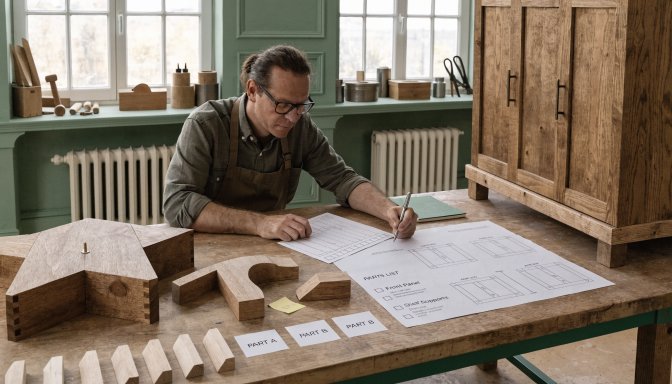
Building smarter in woodworking means creating better conditions for success before the work gets difficult. Instead of pushing through confusion, smarter builders reduce confusion with better plans, better project choice, and better sequencing. That mindset often matters more than raw speed or tool count.
Quick answer: A build smarter not harder woodworking approach means using tested plans, realistic projects, accurate cut lists, and simple shop systems that reduce waste, rework, and avoidable frustration.
What smarter building looks like
- Choosing projects that fit your current shop and skill level
- Using plans that explain the process clearly
- Preparing materials in a deliberate order
- Checking fit before final assembly instead of fixing mistakes afterward
Why harder is not better
Many frustrating builds come from treating difficulty as proof of progress. In reality, repeated guesswork, rushed cutting, and poorly staged assembly usually create more waste than learning. Smarter systems teach faster because they remove noise from the process.
| Harder approach | Smarter approach |
|---|---|
| Rush into cutting | Review plan before material prep |
| Fix problems late | Use checkpoints early |
| Choose oversized builds | Match project to shop and time |
| Trust memory | Label parts and follow sequence |
Bottom line
Build smarter not harder woodworking is not about doing less careful work. It is about doing the right careful work earlier, when it saves the most time and material.