
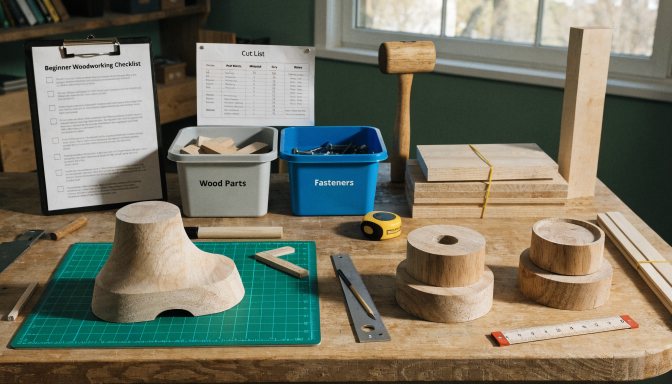
Beginners usually do better with simple systems than with more tools. A good system tells you how to plan, how to label, where parts go, and when to stop and check the build. That structure lowers stress and makes improvement easier to repeat from one project to the next.
Quick answer: Useful woodworking systems for beginners include reading the plan before buying material, labeling parts as they are cut, staging pieces in build order, dry-fitting key assemblies, and ending each session with a quick shop reset.
Core beginner systems worth using
- A pre-build checklist for plans, tools, and materials
- A part-labeling system that stays consistent throughout the build
- A staging method for cut parts and hardware
- A checkpoint habit before glue-up or final fastening
Why systems help so much
Without a system, every project feels like starting over. With a system, you keep useful habits from one build to the next. That continuity helps beginners make faster progress because fewer mistakes come from disorganization.
| Beginner system | Main benefit |
|---|---|
| Pre-build review | Fewer missing materials and surprises |
| Part labeling | Cleaner assembly process |
| Staged workflow | Less clutter and better focus |
| Pause-and-check habit | Catches errors before they spread |
Bottom line
Woodworking systems for beginners matter because they make good outcomes more repeatable. A clear process often helps more than another tool purchase ever could.