
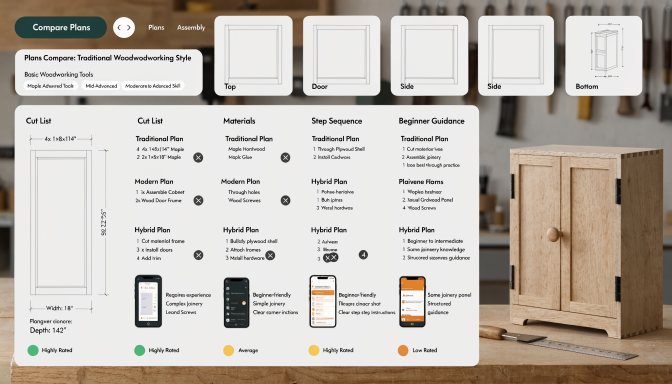
Not every plan feature matters equally. Some details create real clarity, while others only make a plan look more technical. The most useful plan features are the ones that help a builder make better decisions at the exact moments where mistakes usually happen: buying material, cutting parts, and assembling in the right order.
Quick answer: The woodworking plan features that matter most are clear diagrams, accurate materials and cut lists, consistent part labels, logical build order, and enough detail to guide a beginner without forcing too much guesswork.
Top features to prioritize
- Readable drawings from more than one view
- Complete materials list and cut list
- Step-by-step sequence that matches real shop workflow
- Consistent part naming and sizing across the document
Feature comparison
| Plan feature | Why it matters most |
|---|---|
| Clear diagrams | Help builders understand the whole project faster |
| Cut list | Supports accurate part prep and reduced waste |
| Materials list | Makes shopping and budget control easier |
| Build sequence | Reduces assembly mistakes and rework |
What matters less than people think
Extra decorative notes or overly technical presentation can look impressive, but they are not the same as usability. A plain plan with the right information is usually more valuable than a polished plan with important gaps.
Bottom line
The woodworking plan features that matter most are the ones that support action. If the plan makes it easier to buy, cut, label, and assemble correctly, it is doing its job well.