
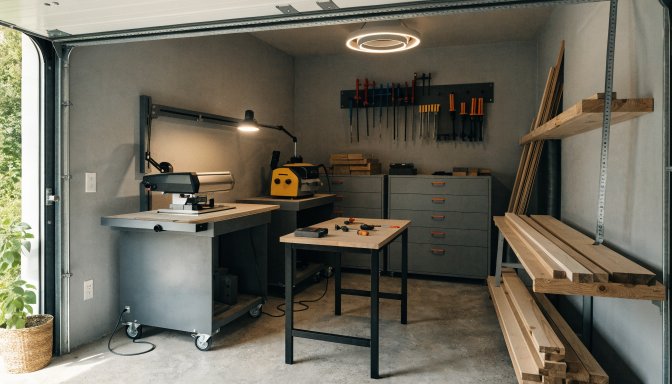
An efficient small shop setup does not try to copy a large professional shop. It focuses on what makes your projects move smoothly: one dependable work surface, enough room to handle stock safely, and storage that supports the next step instead of blocking it.
Quick answer: An efficient small shop woodworking setup keeps the bench usable, puts frequently used tools near the active zone, protects a path for moving material, and relies on simple, flexible storage. The best setup reduces walking, lifting, and reshuffling during the build.
What an efficient setup needs most
Open handling space
You do not need a huge room, but you do need a clear path for long boards, plywood breakdown, or final assembly moves.
One reliable bench area
Whether fixed or mobile, the main bench should support layout, part labeling, and assembly without becoming buried under tools.
Flexible storage
Rolling carts, wall cabinets, and stackable bins usually outperform oversized fixed furniture in a compact shop.
| Setup priority | Reason it matters |
|---|---|
| Clear floor path | Safer movement and easier material handling |
| Bench-first layout | Keeps the main workflow centered |
| Tool proximity | Reduces wasted movement |
| Mobile support pieces | Lets the shop adapt to each project |
What to avoid
A setup becomes inefficient when every wall is full but the floor has no space left to work. Focus on function first. If the shop looks organized but still makes every step awkward, the layout needs to change.
Bottom line
The best small shop setup is not the one with the most storage. It is the one that makes your actual build sequence easier from lumber prep to final assembly.