
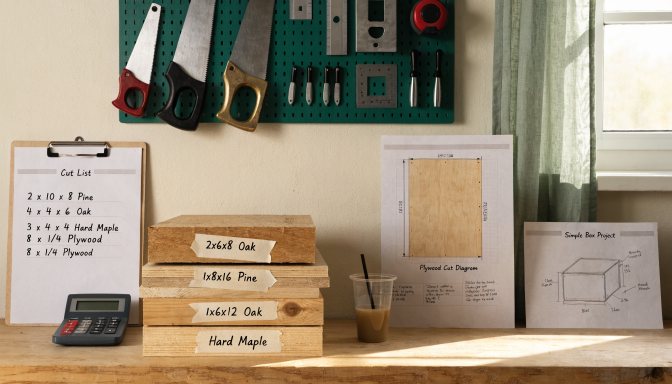
Reducing project cost starts before you buy the first board. Many builds get expensive because the plan is vague, the material list is incomplete, or the design uses more stock than the project really needs. When you simplify the build system, not just the shopping list, you usually save more money and avoid rework at the same time.
Quick answer: To reduce woodworking project costs, choose realistic project scope, use an accurate cut list, simplify materials and joinery, and prioritize useful builds over oversized ones. Cost control works best when planning prevents waste instead of trying to fix it after the purchase.
Where project costs usually climb
- Buying extra lumber because the cut list is incomplete
- Choosing premium material where paint-grade stock would work
- Designing too many parts, curves, or decorative details
- Restarting pieces because dimensions were not checked in sequence
Four practical ways to cut cost
1. Build smaller on purpose
A narrower shelf, shorter bench, or simpler storage unit often delivers nearly the same value with noticeably less material.
2. Standardize stock sizes
When parts come from common board widths or repeated plywood strips, cutting gets faster and waste drops.
3. Use joinery that matches the project
Not every build needs advanced joinery. Strong simple joinery is often the smarter budget choice for beginner or utility projects.
4. Compare project value, not just lumber price
A slightly more expensive build can still be the better choice if it solves a daily storage or organization problem for years.
| Cost problem | Smarter fix |
|---|---|
| Too much material bought | Create a final cut list before shopping |
| Design is overbuilt | Reduce size and part count first |
| Premium stock everywhere | Use better material only where it shows |
| Repeated remakes | Dry-fit critical parts before assembly |
Bottom line
The most reliable way to reduce woodworking project costs is to remove waste before the build begins. Good planning protects both your budget and your confidence, which is exactly what beginner-friendly projects need.