
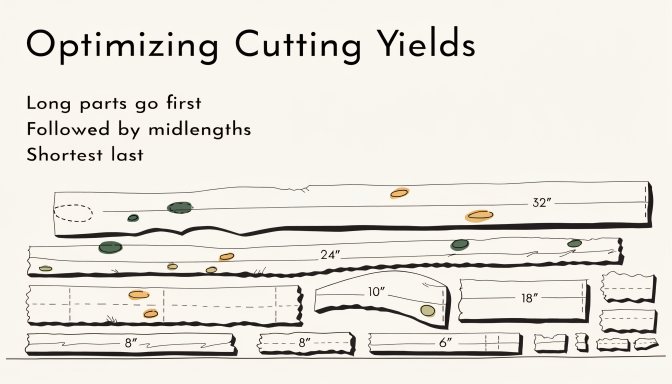
Lumber optimization is not about squeezing every inch from every board no matter what. It is about balancing efficiency, usable grain, defect avoidance, and part priorities so the stock serves the project well instead of just looking good on paper.
Quick answer: Lumber optimization works best when you know your part list first, prioritize long and critical parts, account for board defects, and group similar parts so the remaining offcuts still stay useful. Efficient layout starts with smarter planning, not just tighter measuring.
The core ideas behind optimization
Use the part list to guide the board strategy
Without a clear part list, optimization turns into guesswork. The parts tell you which stock lengths and widths make the most sense.
Reserve the best stock for the hardest parts
Straight, clear stock should go to long rails, visible faces, and structural parts before smaller secondary pieces claim it.
Protect usable offcuts
A good layout does not just create finished parts. It leaves behind offcuts that can still support project needs or future builds.
Optimization choices table
| Choice | Why it helps |
|---|---|
| Cut long parts first | Preserves flexibility for the rest of the board. |
| Mark defects early | Stops unusable stock from being counted as good material. |
| Group similar widths | Makes ripping and batching more efficient. |
| Keep matching parts together | Improves consistency and often improves grain match. |
Bottom line
Lumber optimization is really project optimization. The best board layout is the one that protects quality, reduces waste, and still keeps the build straightforward in the shop.