
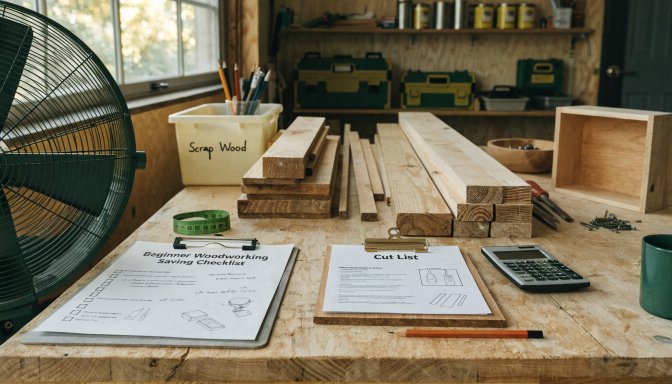
Beginners often try to save money by buying the cheapest material or the cheapest plan. The real savings usually come from choosing a build you can actually finish, buying only what the project needs, and reducing the chances of cutting the wrong piece. In other words, savings come from control.
Quick answer: The best money-saving woodworking tips for beginners are to start with smaller useful projects, build from clear plans, create a real cut list, buy material after checking dimensions twice, and reuse simple project patterns that already work.
Tips that protect your budget
- Choose projects with simple shapes and clear part lists
- Estimate total cost before buying any stock
- Group similar projects so offcuts can be reused later
- Build one version well before scaling up the design
What beginners should avoid
Do not chase savings by skipping planning. The most expensive beginner move is buying wood twice, remaking parts, or abandoning a project halfway through because the build was too ambitious for the shop, tools, or weekend time available.
| Saving habit | Reason it works |
|---|---|
| Use tested plans | Reduces guesswork and remake risk |
| Shop with a cut list | Prevents overbuying and missing parts |
| Build useful small projects | Higher chance of finishing and learning |
| Reuse dimensions | Makes future builds faster and cheaper |
Bottom line
Money-saving woodworking tips work best when they reduce mistakes, not just upfront spending. A low-cost project that gets finished cleanly teaches more and wastes less than a bigger build that never gets completed.