
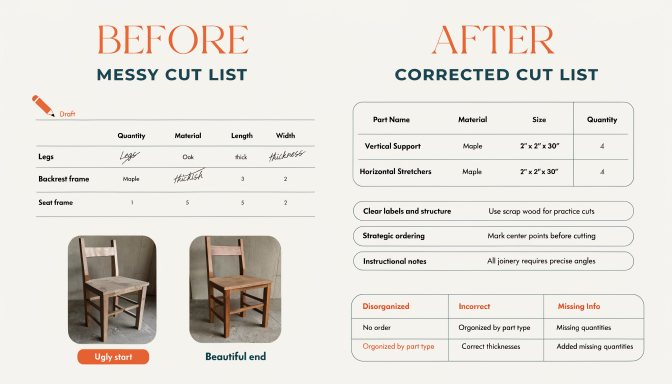
Cut lists help prevent waste, but a weak cut list can create the very problems it was supposed to solve. A missing quantity, vague part name, or unclear thickness note may look small on paper, but it can lead to repeated errors once the material is on the bench.
Quick answer: The biggest cut list mistakes are vague part names, missing quantities, unfinished dimensions, ignored material thickness, and no notes for matching parts or delayed cuts. A cut list should remove ambiguity, not add it.
The most common cut-list mistakes
- Writing “panel” or “rail” without saying which one
- Leaving out quantity
- Mixing rough sizes with finished sizes
- Ignoring material thickness differences
- Skipping notes for matching parts, grain, or orientation
Why these mistakes matter
Cut lists drive both material buying and cutting decisions. If the list is incomplete, the builder starts improvising. Improvisation can work once or twice, but it becomes expensive when several parts depend on the same unclear assumption.
Cut-list cleanup table
| Mistake | Better fix |
|---|---|
| Vague name | Use a specific part name that matches the plan |
| No quantity | Add exact number of needed parts |
| Wrong size type | Use finished dimensions consistently |
| No material column | Separate hardwood, plywood, and framing stock clearly |
Bottom line
A good cut list should answer the basic questions before the saw is plugged in. If it leaves too much room for interpretation, it is not ready yet.