
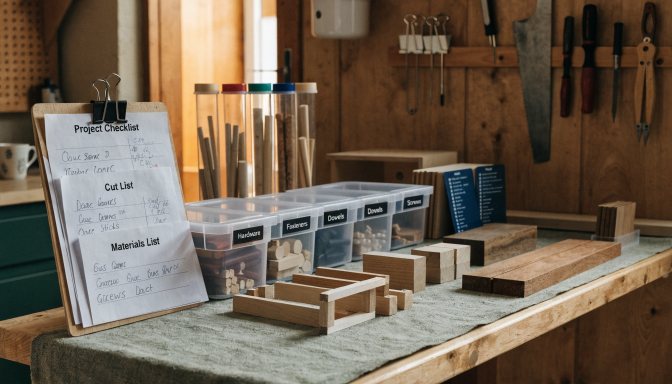
Hobbyist woodworkers usually benefit more from better planning systems than from adding more tools. A simple repeatable process helps you know what to build, what to buy, how to stage parts, and when to pause for a fit check. Those small habits do not make woodworking feel rigid. They make it feel more manageable.
Quick answer: Good woodworking planning systems for hobbyists include reviewing the plan before shopping, turning the plan into a materials and cut list, labeling parts as they are cut, staging components by assembly step, and using checkpoints before glue-up or final fastening.
Why hobbyists need planning systems
- Most hobby builds happen in limited time blocks
- Home shops usually have tighter space and storage limits
- Projects often pause between sessions and need clean restart points
- Material waste feels more expensive when every board matters
A simple planning system that works
1. Pre-build review
Read the project fully before buying material. Confirm the footprint, tool needs, and likely problem areas.
2. Material and cut planning
Turn the plan into a shopping list and a clear cut sequence. This keeps the build from starting with confusion.
3. Part labeling and staging
As pieces are cut, label them and place them in groups that match the next step. This prevents the classic hobby-shop problem of losing track of what is what.
4. Checkpoint workflow
Pause before permanent assembly to confirm fit, orientation, and squareness. Small checkpoints protect the whole project.
| Planning system step | Main benefit |
|---|---|
| Pre-build review | Fewer surprises once the project starts |
| Material planning | Better cost control and less overbuying |
| Part labeling | Cleaner assembly and fewer mix-ups |
| Fit checkpoints | Problems get caught before they spread |
How systems improve the hobby experience
Woodworking feels more enjoyable when you can return to a project and immediately see the next step. Planning systems help create that continuity. They lower restart friction, protect confidence, and make it easier to finish what you begin.
Bottom line
Woodworking planning systems for hobbyists matter because they turn experience into repeatable habits. The better the system, the easier it becomes to build accurately, waste less, and enjoy the process with less stress.