
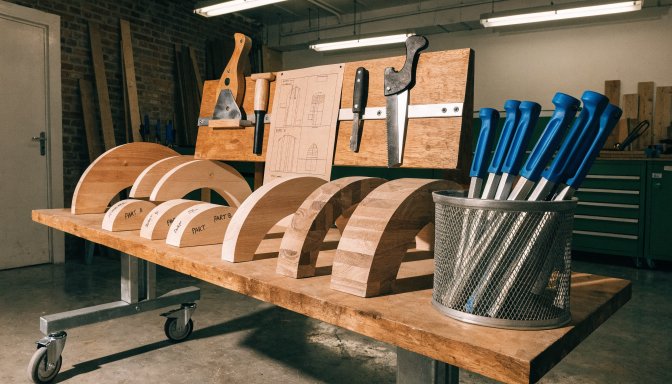
A mobile workbench changes how a shop works. It adds flexibility, but it also means the project should be designed around a surface that moves, shifts roles, and may need to share space with storage, parking, or household use. The right plan makes that flexibility feel like an advantage instead of a compromise.
Quick answer: The best woodworking plans for mobile workbench users feature clear part staging, manageable project footprints, and assembly steps that can be completed on one movable surface. Plans work better when they reduce the need for large fixed shop zones.
What mobile-bench users need from a plan
- Parts that can be measured and labeled on one central surface
- Assembly stages that do not require permanent outfeed or side tables
- Project dimensions that still leave room to move the bench safely
- Clear stopping points between sessions
Why some plans work better than others
Plans built around compact furniture, cabinets, shelving, and shop accessories usually translate well to mobile-bench work. Oversized builds with long panels and large glue-ups often need more fixed support than a flexible shop can provide.
| Plan trait | Benefit for mobile-bench users |
|---|---|
| Compact part sizes | Easier layout and safer handling |
| Staged subassemblies | Lets the bench serve multiple roles |
| Clear diagrams | Less re-positioning to figure out the next step |
| Short pause points | Useful for shared or temporary shops |
Bottom line
Woodworking plans for mobile workbench users should support flexibility without creating chaos. If the plan helps you measure, build, move, and reset with confidence, it fits the setup well.