
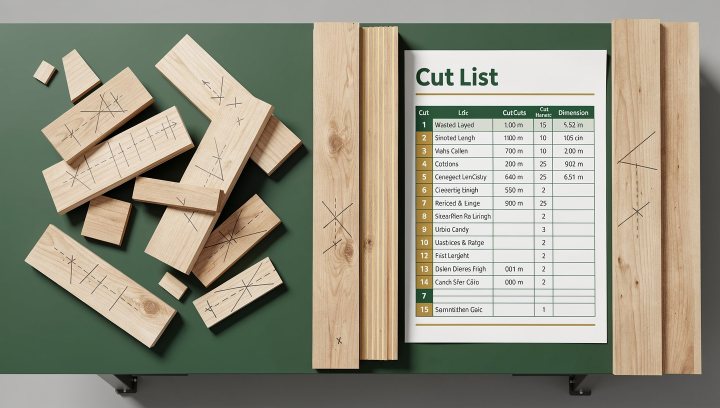
Lumber waste is one of the fastest ways to make woodworking feel expensive. In many beginner shops, the problem is not the price of wood alone. It is the number of preventable mistakes that turn usable stock into scrap before the project ever comes together.
Quick answer: The biggest woodworking mistakes that waste lumber are buying without a cut plan, ignoring board defects, cutting parts in the wrong order, and measuring each repeated part separately. A clear cut list and board layout can save more money than bargain shopping for materials.
Where waste usually starts
No cut list
Without a written cut list, it is easy to forget parts, misjudge lengths, and buy extra wood just to feel safe.
Poor board layout
Good boards get wasted when long parts are cut from the wrong section, leaving unusable short scraps behind.
Skipping board inspection
Knots, twist, cup, and split ends affect what part of a board is truly usable. If you ignore that, your material estimate will be wrong from the start.
Cutting the easy parts first
When short parts get cut first, they can consume stock that should have been reserved for longer pieces that have fewer options.
How to waste less lumber
| Better habit | Result |
|---|---|
| Write a full cut list first | You buy the right amount and reduce guesswork. |
| Mark defects before planning cuts | You avoid counting unusable sections as good stock. |
| Cut long parts first | You preserve flexibility in the remaining material. |
| Use one sample part before batch cutting | You avoid repeating the same mistake across multiple boards. |
Bottom line
If you want to save money on woodworking, start by wasting less wood. A good cut list, smarter board layout, and better sequencing will improve both your budget and your results.