
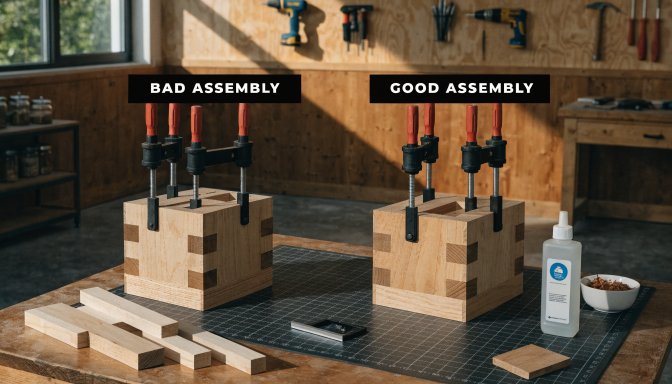
Assembly mistakes are expensive because they show up late. By the time a project feels wrong, the parts are already cut, the holes are already drilled, and the glue may already be setting. That is why assembly is less about speed and more about control.
Quick answer: The biggest woodworking assembly mistakes are skipping the dry fit, applying too much clamp pressure, assembling out of sequence, and failing to check for square during each step. Assembly goes better when the parts are prepared and the process is staged before glue comes out.
Common assembly problems
Skipping the dry fit
A dry fit reveals misaligned parts, missing clearances, and awkward clamp access before the project becomes time-sensitive.
Too much clamp pressure
More pressure does not automatically mean a better glue-up. It can shift parts and pull an assembly out of square.
Bad sequence
Some assemblies become much harder once one panel or frame is attached first. The order matters more than many beginners expect.
Assembly checklist
| Check | Purpose |
|---|---|
| Dry fit the full section | Confirms the parts actually go together as planned. |
| Stage clamps and tools first | Prevents rushed decisions once glue is applied. |
| Check square after light pressure | Lets you correct alignment before tightening fully. |
| Recheck diagonals | Confirms rectangular assemblies are still true. |
Bottom line
Good assembly is a planned step, not a scramble at the end. If you dry fit first and build in a deliberate sequence, the whole project becomes easier to control.