
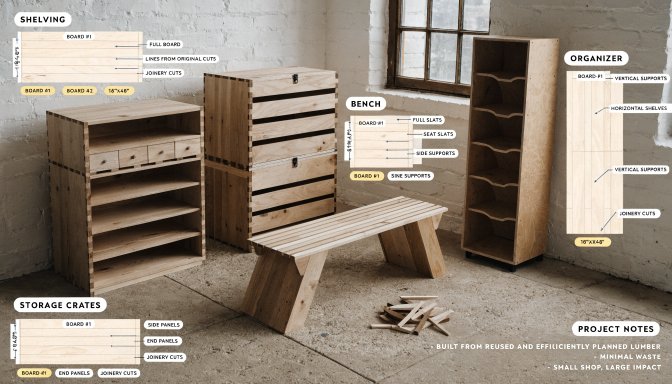
Low-waste projects are easier to finish because the design matches the material instead of fighting it. That usually means straight cuts, repeated dimensions, and fewer awkward offcuts. For a beginner, those features matter just as much as cost, because less waste also means fewer chances to make an unrecoverable mistake.
Quick answer: The best low-waste woodworking projects are shelves, crates, wall organizers, utility tables, planter boxes, and simple plywood storage builds. They use repeated parts, standard board sizes, and efficient layouts that leave less scrap behind.
What makes a project low waste
- Parts can be cut from full boards with little trimming loss
- Plywood pieces nest well inside a single sheet layout
- The design avoids tiny filler strips and highly irregular shapes
- Offcuts can be reused in the same project family
Low-waste project examples
| Project | Why waste stays low |
|---|---|
| Wall shelf set | Repeated widths and easy board planning |
| Storage crate | Short parts can come from offcuts |
| Plywood organizer | Rectangular parts nest efficiently in sheet goods |
| Simple bench | Straight structural parts and few decorative cuts |
How to pick the right one
Choose low-waste projects that fit your available stock and your shop size. A project is not truly efficient if it needs more handling space, more clamps, or more cutting stages than your setup can support.
Bottom line
The best low-waste woodworking projects do more than save scraps. They create cleaner planning, smoother cutting, and a better chance of finishing the build on budget and on time.