
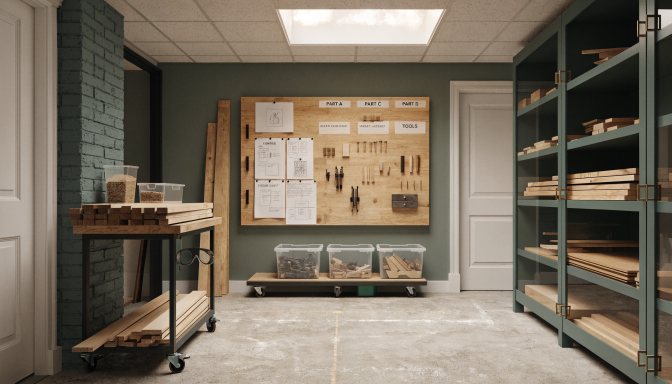
Compact woodshops reward planning because every mistake consumes space as fast as it consumes time. If a project spreads too far across the bench, blocks the floor path, or mixes raw stock with finished parts, the shop starts working against you. Good planning keeps the build smaller, clearer, and easier to resume.
Quick answer: The best compact woodshop project planning tips are to choose projects by footprint, stage materials in sequence, protect one clear work surface, and break builds into manageable subassemblies. The smaller the shop, the more valuable this structure becomes.
Planning priorities in a compact woodshop
- Know the project footprint before buying material
- Decide where stock, cut parts, and assemblies will wait
- Pick projects that can pause cleanly between work sessions
- Keep your main bench available for the current step only
Helpful planning habits
| Habit | Why it helps |
|---|---|
| Footprint check | Prevents builds that outgrow the room |
| Part labeling | Reduces mix-ups when space is tight |
| Session planning | Makes short work windows more productive |
| Daily reset | Keeps the next step easy to start |
Bottom line
Compact-shop project planning works best when it reduces movement, clutter, and decision overload. A smaller room feels more capable when each build is designed to fit it from the start.