
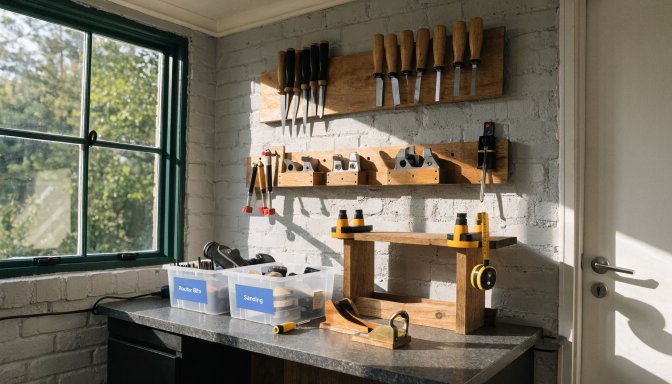
Limited tool space does not automatically limit good woodworking. The real problem starts when too many tools compete for the same surface, or when project choice assumes equipment and room you do not have. A tighter setup works best when the tool system stays simple and the project sequence stays controlled.
Quick answer: To succeed with limited tool space, keep only current-use tools near the active bench, store the rest vertically or in bins, choose projects that match your setup, and avoid builds that demand large fixed stations. Control beats quantity in a compact shop.
Main mistakes in limited tool space
- Using the bench as permanent storage
- Keeping every tool within reach even when unused
- Selecting projects that require more stations than the shop can support
- Letting hardware, scraps, and current parts mix together
What helps most
Tool triage
Only the tools needed for the current stage should stay in the immediate work zone. Everything else can be stored until needed.
Flexible storage
Shallow shelves, rolling carts, and labeled bins often work better than bulky cabinets in very small areas.
Project restraint
A project that suits the room is always easier to finish than one that forces constant rearranging.
| Space problem | Smarter response |
|---|---|
| Crowded bench | Keep only current-stage tools out |
| No room for large stations | Use portable or multi-use surfaces |
| Mixed project parts | Label and stage in small batches |
| Too many tools overall | Prioritize versatile essentials |
Bottom line
Woodworking with limited tool space gets easier when your setup serves the workflow instead of fighting it. A smaller, calmer system often produces cleaner results than a crowded one.