
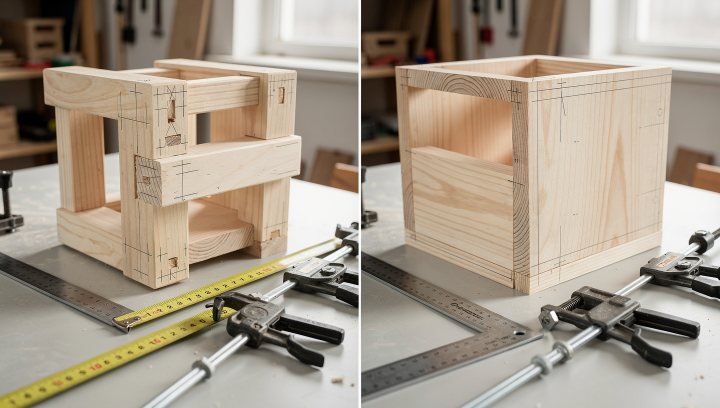
Woodworking mistakes usually feel random when you are new, but most of them come from a small set of repeatable problems. Projects go wrong when the plan is only partly understood, the material is not checked, the measurements drift, or the assembly starts before the fit is confirmed. That is good news because a repeatable problem can be handled with a repeatable system.
Quick answer: To avoid mistakes in woodworking, slow down long enough to use the same basic system every time: read the plan fully, verify your materials, make a cut list, measure from one reference, test one part before batch cutting, and dry fit before final assembly.
The five-step mistake-prevention system
1. Read before you cut
Many beginner errors start because the project is skimmed instead of studied. Read through the whole plan and identify the parts, joinery, hardware, and build order before you buy or cut anything.
2. Verify the materials
Actual wood thickness, board quality, and straightness matter more than the label at the store. A plan can be good and still fail if the stock does not match what the project expects.
3. Build a real cut list
A written cut list reduces guesswork and helps you catch missing parts, inefficient board usage, and dimension conflicts early.
4. Use one reference system
Pick one face and one edge as your layout reference. That keeps repeated parts more consistent and helps assemblies line up better.
5. Dry fit the important sections
Before glue, screws, or heavy clamp pressure, test how the parts go together. A dry fit exposes alignment trouble while the project is still easy to correct.
What a good prevention habit looks like
| Habit | What it prevents |
|---|---|
| One sample part before batch cutting | Repeating the same wrong dimension several times |
| Labeling parts clearly | Assembly confusion and flipped pieces |
| Checking actual stock thickness | Joinery problems and final size drift |
| Reading the last step before the first step | Discovering hidden constraints too late |
Bottom line
Avoiding mistakes in woodworking is not about being naturally careful. It is about using the same simple process often enough that small errors stop slipping through. Build the system first, and the projects get easier after that.