
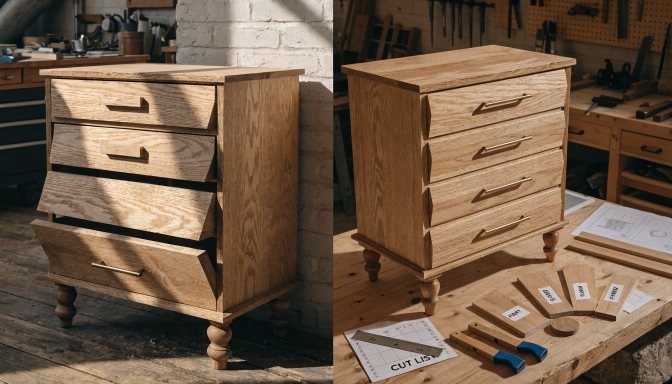
DIY wood projects rarely fail because the builder did not care. They fail because too many small decisions were made without a system. When the plan is unclear, the measurements drift, the materials are not staged, and the build order is guessed instead of planned, failure starts looking random even though it is usually predictable.
Quick answer: DIY wood projects fail because of weak planning, unclear cut lists, bad measurement habits, poor material selection, and rushed assembly. Most failed projects are not caused by a lack of skill alone. They are caused by a lack of structure before the build begins.
The failure pattern most beginners follow
Choose a project too quickly
The build may look simple online but still require more precision, more space, or better material planning than expected.
Start cutting before fully understanding the design
This creates missing parts, wrong lengths, and confusion once assembly begins.
Try to fix problems during assembly
By that point, every correction costs more time and usually makes another part of the project harder.
How to build smarter instead
| Failure point | Smarter system |
|---|---|
| Unclear plan | Read the full plan and rewrite the steps in your own build order. |
| Material surprises | Create a materials list and cut list before shopping. |
| Inaccurate parts | Use consistent references and sample parts before batch cutting. |
| Crooked assembly | Dry fit and check square at each stage. |
Bottom line
DIY wood projects fail when too much is left to improvisation. If you plan the workflow, verify the materials, and build with checkpoints, the project has a much better chance of going together cleanly and staying enjoyable from start to finish.