
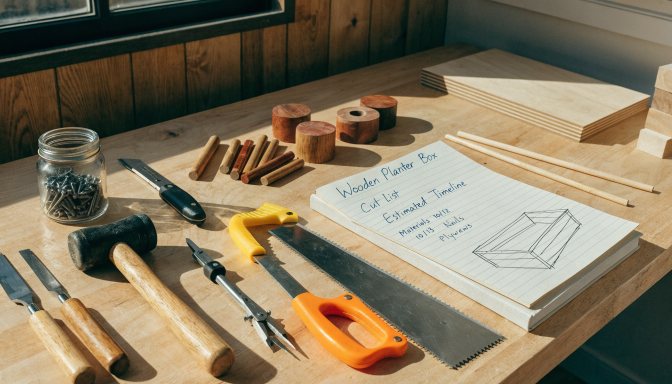
DIY woodworkers often work with limited time, shared spaces, and a shorter tool list. That means planning matters even more. Small mistakes feel bigger when a project has to fit around weekends, garages, driveways, or multi-use rooms. Good planning tips help reduce that friction before it shows up in the build.
Quick answer: The best planning tips for DIY woodworkers are to choose simpler projects with clear value, write a real cut list, plan the build order in advance, test one part before repeating cuts, and keep the shop setup realistic for the time and space you actually have.
Eight useful planning tips
- Choose the project for fit, not just interest.
- Read the plan once for understanding and once for execution.
- Label parts as soon as they are cut.
- Use a sample piece before repeating dimensions.
- Stage the next tools and materials before assembly.
- Leave extra time for dry fitting and adjustments.
- Keep one written working checklist near the bench.
- Do not treat offcuts as automatically useless.
Tip vs benefit
| Planning tip | Main benefit |
|---|---|
| Pick a realistic project | Reduces unfinished builds and frustration |
| Write a clear cut list | Lowers waste and confusion |
| Plan the sequence | Prevents blocking yourself later |
| Stage the workflow | Saves time during the build |
Bottom line
DIY woodworking gets easier when the project is made smaller in your head before it gets made in wood. Good planning tips do not make the work boring. They make the work smoother.