
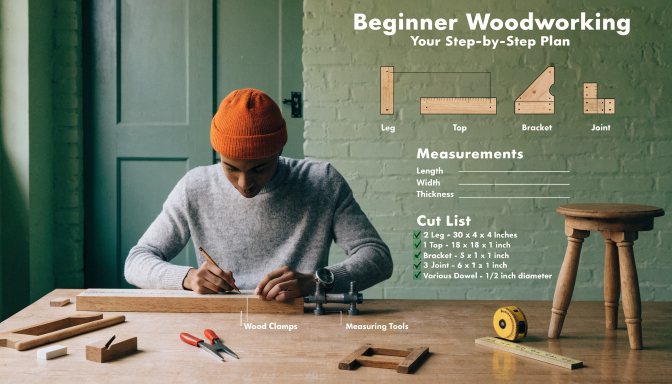
Smart woodworking tips are usually simple, but they work because they prevent predictable problems. The beginner who plans the project, checks the cut list, labels parts, and chooses a realistic build will often get a better result than the beginner who rushes into a more ambitious project with no system.
Quick answer: Smart woodworking tips for beginners include choosing projects that fit your shop and tools, reading plans before buying material, labeling parts as you cut them, checking assembly order early, and focusing on clean process instead of speed.
Beginner tips that make the biggest difference
- Start with useful projects you can finish in a realistic time frame
- Use plans with clear materials lists and build steps
- Measure and label before parts start piling up
- Dry-fit important assemblies before committing to fasteners or glue
Why these tips work
They reduce avoidable errors at the exact points where beginners usually lose control: planning, part tracking, assembly order, and project scope. Each small system reduces pressure later in the build.
| Tip | Why it matters |
|---|---|
| Choose realistic projects | Improves finish rate and confidence |
| Use better plans | Reduces guesswork and rework |
| Label parts | Prevents mix-ups during assembly |
| Check fit early | Catches errors before they spread |
Bottom line
Smart woodworking tips for beginners are really about building with more intention. When you create a simple system and follow it, the work gets calmer, cleaner, and more repeatable.