
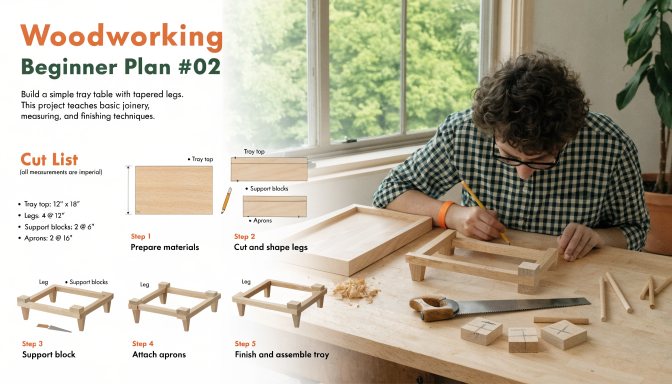
Step-by-step plans improve woodworking because they turn a project into smaller decisions. Instead of holding the whole build in your head, you can focus on the current stage, check the next move, and keep progress steady. That change sounds simple, but it has a big effect on accuracy and confidence.
Quick answer: Step-by-step plans improve woodworking by clarifying sequence, reducing missed steps, making assembly easier to understand, and helping beginners recover from uncertainty before it becomes a mistake.
Why sequence matters so much
Most woodworking problems are not caused by one dramatic error. They come from several small decisions made out of order. Step-by-step plans protect against that by showing what should happen first, what depends on it, and when it is safe to move on.
Main advantages of step-by-step plans
- They reduce cognitive overload for beginners
- They make it easier to stage tools and materials
- They reveal missing information earlier
- They make pause-and-resume building more manageable
| Step-by-step benefit | Result in the shop |
|---|---|
| Clear order of operations | Fewer assembly and measurement mistakes |
| Smaller decision blocks | Less overwhelm for new builders |
| Better staging | Cleaner, calmer work sessions |
| Built-in checkpoints | Easier correction before errors spread |
Bottom line
Step-by-step plans improve woodworking because they organize both the project and the builder. That extra clarity is often the difference between a frustrating build and a finished one.