
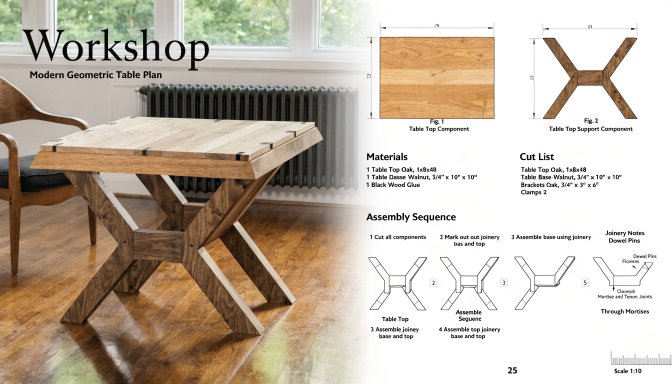
Detailed woodworking plans matter because woodworking errors often start long before a bad cut. They start when the builder is missing context. A complete plan gives context for size, sequence, materials, and part relationships. That reduces the need to guess, redo, or buy more stock than necessary.
Quick answer: Detailed woodworking plans matter because they improve accuracy, help with material buying, clarify build order, and reduce costly mistakes. More detail creates more control, especially for beginners and hobby woodworkers.
What detail actually improves
- Material planning becomes more accurate
- Cutting errors are easier to catch before they happen
- Assembly makes more sense because part relationships are clearer
- Project confidence improves because fewer decisions are left unresolved
Where detail has the biggest value
| Plan detail | Practical benefit |
|---|---|
| Materials list | Reduces overbuying and missing items |
| Cut list | Improves efficiency and cutting order |
| Dimensions in multiple views | Clarifies part relationships |
| Assembly sequence | Prevents awkward build-order mistakes |
What detail is not
Useful detail is not clutter. It is not adding complexity for its own sake. Good plan detail simply answers the questions a builder would otherwise have to solve mid-project, when solving them is more expensive.
Bottom line
Detailed woodworking plans matter because they prevent uncertainty from turning into waste. The clearer the instructions, the easier it is to build accurately and finish with confidence.